
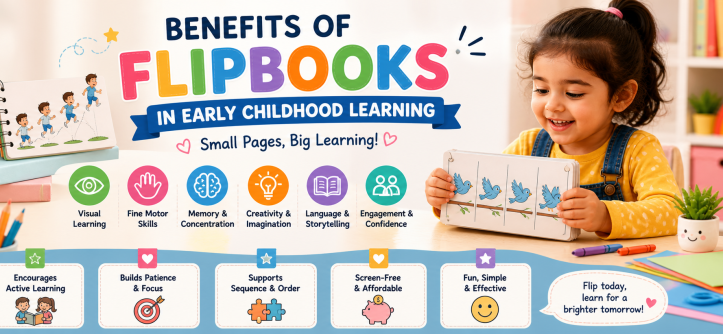
Flipbooks may look simple, yet they offer powerful learning opportunities for young children. Made up of a sequence of images that create movement when flipped quickly, flipbooks capture attention and curiosity in a way that feels playful and engaging. In early childhood learning, tools that combine fun with education can make a big difference, and flipbooks fit perfectly into this approach.
Young children learn best through visual experiences, movement, and hands-on activities. Flipbooks bring all these elements together. They allow children to see stories unfold frame by frame, helping them understand sequences, actions, and changes over time. This type of learning supports early brain development and builds a strong foundation for future skills.
One of the biggest advantages of flipbooks is their ability to improve visual learning. Children at a young age rely heavily on what they see. Flipbooks present ideas through pictures, making it easier for kids to understand concepts without needing complex explanations. For example, a flipbook showing a seed growing into a plant helps a child grasp the idea of growth in a clear and simple way.
Another key benefit is the development of fine motor skills. Holding a flipbook, turning pages, and even creating one require hand movement and coordination. These small actions strengthen the muscles in a child’s hands and fingers. Over time, this supports important skills such as writing, drawing, and handling objects with better control.
Flipbooks also help improve focus and attention. When children flip through the pages, they need to concentrate on the sequence to see the animation clearly. This encourages them to stay engaged for longer periods. Building attention span at an early age is valuable, as it supports learning in many other areas.
Memory development is closely linked to this process. Watching a story unfold in small steps helps children remember what they have seen. Repetition plays a role here too. Children often enjoy flipping through the same book multiple times, which reinforces memory and strengthens understanding. Each time they revisit the story, they may notice new details or better understand the sequence.
Creativity is another area where flipbooks shine. Children can create their own flipbooks using simple drawings. This allows them to express ideas, tell stories, and explore their imagination. Drawing each frame encourages planning and thinking about what comes next. This kind of creative activity supports problem-solving and independent thinking.
Storytelling skills also improve through flipbook use. As children watch or create stories, they begin to understand how events connect. They learn about beginnings, middles, and endings. This understanding is important for communication and language development. Even if a child cannot fully explain a story yet, they begin to grasp how stories work.
Language development benefits from flipbooks as well. Parents and teachers can use them to introduce new words and phrases. By describing what is happening in each frame, adults help children connect words with actions and images. Asking simple questions like “What is happening here?” or “What comes next?” encourages children to think and respond.
Flipbooks are especially useful for interactive learning. Unlike many digital tools, they do not rely on screens. This makes them a great option for reducing screen time while still offering engaging content. Children can touch, hold, and explore flipbooks in a hands-on way, which supports sensory learning.
Another important benefit is that flipbooks are easy to use and accessible. They can be made at home with paper and drawings or purchased at a low cost. This makes them a practical option for families and educators looking for effective learning tools without needing expensive materials.
Flipbooks can also support emotional development. Stories shown through images can introduce feelings such as happiness, sadness, or excitement. Children begin to recognize these emotions by observing characters and situations. This helps them understand their own feelings and those of others, which is an important part of social development.
Confidence grows when children create and complete their own flipbooks. Finishing a project gives them a sense of achievement. Sharing their work with others can boost self-esteem and encourage communication. These positive experiences help build a strong sense of independence.
Group activities with flipbooks can encourage teamwork and cooperation. Children can work together to create a story, with each child contributing a few pages. This teaches them how to share ideas, listen to others, and work toward a common goal.
Flipbooks can also be used to teach simple academic concepts. Numbers, letters, shapes, and colors can all be included in flipbook designs. For example, a flipbook showing numbers increasing step by step can help children understand counting. A sequence of shapes changing or moving can introduce basic geometry concepts in a fun way.
Another advantage is the flexibility of flipbooks. They can be adapted for different learning levels and interests. Younger children may enjoy simple animations, while older preschoolers can create more detailed stories. This makes flipbooks a tool that grows with the child.
Parents and teachers can easily include flipbooks in daily routines. A short flipbook session can be part of playtime, learning time, or even storytelling time before bed. Consistent use helps reinforce skills and keeps children engaged.
Combining flipbooks with other activities can increase their impact. For example, after reading a story, children can create a flipbook based on what they learned. This connects reading with creative expression and strengthens understanding.
The simplicity of flipbooks is part of their strength. Without the distractions of sound effects or fast-moving visuals, children can focus on the core idea of the story. This slower pace allows them to process information more effectively.
In today’s environment, where digital content is widely available, flipbooks offer a refreshing alternative. They bring learning back to hands-on interaction and creativity. This balance is important for healthy development in early childhood.
As children grow, the skills they gain from using flipbooks continue to support their learning journey. Improved coordination, better focus, stronger memory, and creative thinking all contribute to success in school and beyond.
Flipbooks may seem like a simple tool, yet their impact on early childhood learning is significant. They provide a unique way for children to explore ideas, develop skills, and enjoy the process of learning. By combining movement, storytelling, and creativity, flipbooks create an engaging experience that supports growth in many areas.
When used regularly and thoughtfully, flipbooks can become a valuable part of a child’s learning environment. They encourage curiosity, build confidence, and make learning an enjoyable experience from an early age.
Tags: benefits of flipbooks, early childhood learning tools, flipbooks for kids, kids learning activities, preschool learning ideas, visual learning for toddlers
Leave a Reply