



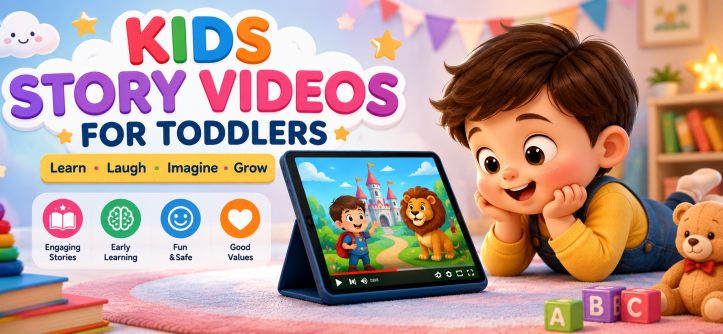
Kids story videos for toddlers have become a favorite choice for parents who want a balance between entertainment and early learning. With colorful animation, simple language, and engaging characters, these videos can support a child’s development in ways that feel natural and fun. When used thoughtfully, they can help toddlers build language skills, understand emotions, and spark curiosity about the world around them.
Why Story Videos Matter for Toddlers
At the toddler stage, children absorb information quickly. Their brains are developing at a fast pace, and storytelling plays a big role in shaping how they understand words, actions, and feelings. Story videos combine visuals, sounds, and narration, making it easier for young children to follow along compared to traditional reading alone.
The combination of moving images and spoken words helps toddlers connect language with meaning. For example, when a character says “apple” while holding one, the child starts linking the word to the object. This kind of repetition strengthens memory and supports early vocabulary building.
Another benefit is attention span. Many toddlers struggle to sit still for long periods, but short story videos are designed to match their natural rhythm. Bright colors, music, and simple plots keep them engaged without overwhelming them.
Educational Value Beyond Entertainment
Story videos can do much more than entertain. They often introduce basic concepts such as numbers, shapes, colors, and everyday routines. Some stories focus on social skills like sharing, saying thank you, or helping others.
Emotional development is another key area. Through characters and simple storylines, toddlers learn to recognize feelings such as happiness, sadness, and frustration. Watching how characters handle situations can guide children in understanding their own emotions.
For instance, a story about a character losing a toy and feeling sad can help a toddler relate to similar experiences. When the story shows comfort or problem-solving, it offers a model for coping in real life.
Language Development and Listening Skills
Story videos expose toddlers to new words and sentence structures. Repetition plays a major role here. Many videos repeat key phrases, making it easier for children to remember and eventually use them.
Listening to stories helps toddlers improve their ability to follow instructions and understand sequences. Even simple plots—like waking up, getting dressed, and going outside—teach the concept of order and routine.
Narration style matters as well. Clear, slow speech with expressive tone helps toddlers grasp meaning better. Songs and rhymes included in many story videos add another layer of learning by improving memory and rhythm recognition.
The Role of Visual Storytelling
Visual elements are what make story videos especially appealing to toddlers. Bright colors, friendly characters, and simple backgrounds help keep the focus on the story without distraction.
Animation can simplify complex ideas. For example, showing a plant growing from a seed over time helps toddlers understand change and growth in a way that words alone may not achieve.
Facial expressions and body language in animated characters also play a role. Toddlers begin to recognize emotions through visual cues, which supports empathy and social awareness.
Choosing the Right Story Videos
Not all kids story videos are created equal. Some are fast-paced and overstimulating, which can make it harder for toddlers to focus or relax afterward. Others are calm, educational, and better suited for young viewers.
When selecting videos, parents can look for:
- Simple storylines with clear beginnings and endings
- Slow pacing that allows understanding
- Positive messages and gentle conflict resolution
- Age-appropriate language
- Minimal background noise or distractions
It’s helpful to preview videos before sharing them with a child. This gives a better sense of tone, language, and overall suitability.
Screen Time: Finding a Healthy Balance
Story videos can be useful, but moderation is key. Toddlers still need plenty of real-world interaction, playtime, and physical activity.
Experts often suggest limiting screen time for young children and focusing on quality rather than quantity. Watching together can make a big difference. When parents sit with their child, they can talk about the story, ask questions, and reinforce what is being learned.
For example, after watching a story about animals, a parent might ask, “Which animal did you like?” or “What sound does the dog make?” This turns passive viewing into an active learning experience.
Encouraging Interaction During Viewing
Even though videos are on a screen, they don’t have to be a one-way activity. Encouraging toddlers to interact can boost engagement and learning.
Parents can pause the video to ask simple questions or point out details. Repeating words or phrases together helps reinforce language skills. Singing along with songs in the video adds movement and fun.
Gestures and actions can also be included. If a character is jumping, toddlers can try jumping too. This connects physical movement with storytelling, making the experience more memorable.
Supporting Creativity and Imagination
Story videos often introduce magical worlds, talking animals, and imaginative scenarios. These elements can inspire toddlers to create their own stories during playtime.
After watching a story, children might act it out with toys or invent new adventures for the characters. This type of imaginative play is important for cognitive growth and problem-solving skills.
Drawing scenes from the story or talking about what might happen next are simple ways to extend the experience beyond the screen.
Cultural Awareness and Diversity
Many kids story videos include characters from different backgrounds, cultures, and traditions. Exposure to diverse stories can help toddlers become more open and accepting as they grow.
Simple introductions to different foods, clothing, or celebrations can build curiosity about the world. Even at a young age, children can start recognizing that people live in different ways, and that’s something to appreciate.
Common Mistakes to Avoid
Some parents rely too heavily on videos as a way to keep children occupied. This can reduce opportunities for direct interaction, which is essential at this age.
Another issue is choosing content that is too advanced. If the story is complicated or the language is too difficult, toddlers may lose interest or become confused.
Background screen time—like leaving videos playing without active viewing—can also reduce the benefits. Focused, intentional viewing is far more effective.
Building a Routine with Story Videos
Story videos can become part of a daily routine when used thoughtfully. For example, a short video in the morning or before bedtime can create a sense of structure.
Bedtime story videos with calm narration and soft music can help toddlers wind down. Daytime videos can focus on learning or playful themes.
Consistency helps toddlers know what to expect, which creates a sense of comfort and stability.
The Future of Kids Story Content
As technology continues to grow, story videos are becoming more interactive. Some platforms now include features where children can make choices within the story or respond to prompts.
These experiences can further improve engagement and learning. Still, the basics remain the same: clear storytelling, simple language, and meaningful messages.
Parents still play the most important role in guiding how and when this content is used.
Final Thoughts
Kids story videos for toddlers can be a valuable tool when chosen carefully and used in moderation. They support language development, emotional understanding, and creativity in a format that feels natural for young children.
The key lies in involvement. Watching together, asking questions, and connecting stories to real life can turn a simple video into a rich learning experience. With the right balance, story videos can become a positive part of a toddler’s daily routine, helping them grow while keeping their sense of wonder alive.
Tags: Bedtime Stories, Bedtime stories for kids, Educational videos for toddlers, Kids story videos for toddlers, ToddlerLearning

Leave a Reply
Cancel reply